
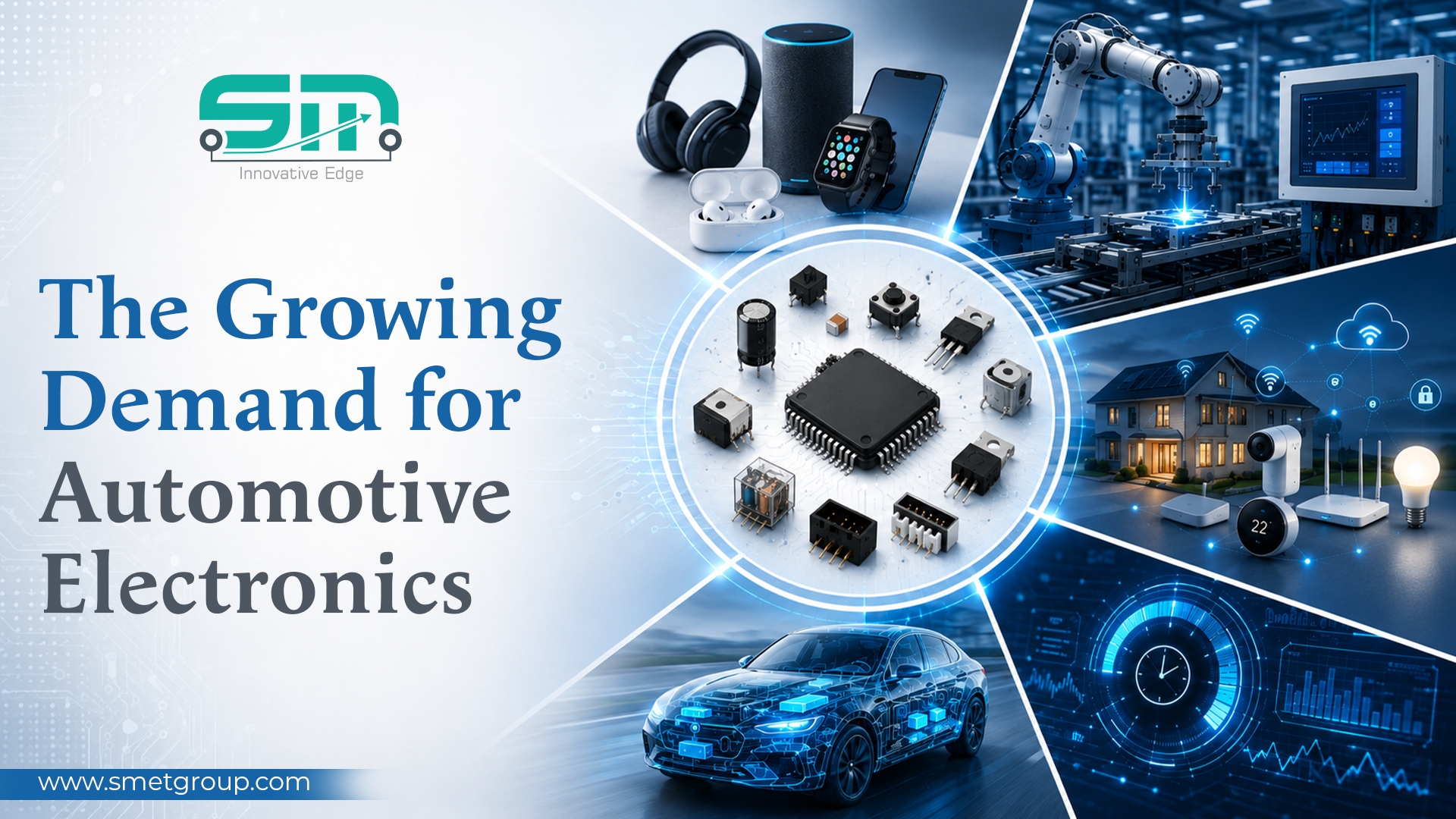
The automotive industry is undergoing a major transformation, driven by rapid advancements in electronics, connectivity, and intelligent technologies. Modern vehicles are no longer just mechanical machines-they are becoming smart, connected, and software-defined systems.
In this blog, we will explore the factors for driving demand for automotive electronics:
1. Rise of Electric Vehicles (EVs)
The global shift toward electric mobility has significantly increased the demand for advanced electronic components.
2. Connected Vehicles
Wireless communication modules, telematics systems, and IoT-enabled components are becoming essential in connected vehicles.
3. Advanced Driver Assistance Systems (ADAS)
Features such as adaptive cruise control, lane departure warning, automatic emergency braking, and parking assistance depend on cameras, radar, LiDAR, sensors, and high-performance processors, increasing the need for reliable automotive electronics.
4. Growing Consumer Expectations
Consumers expect vehicles to offer premium digital experiences, including touchscreen infotainment systems, voice assistants, smartphone integration, wireless charging, and personalized driving settings.
5. Stricter Safety and Emission Regulations
Governments worldwide are implementing stricter safety and environmental regulations. Automakers are integrating electronic control units (ECUs), sensors, and intelligent monitoring systems to comply with emission standards and improve vehicle safety.
Automotive electronics are at the heart of the next generation of mobility. With the rapid adoption of electric vehicles, connected technologies, and intelligent safety systems, the demand for advanced electronic components is growing faster than ever. Businesses that embrace innovation, maintain robust supply chains, and deliver high-quality automotive-grade components will be well-positioned to meet the evolving needs of the global automotive industry. To explore more blogs Read more.